
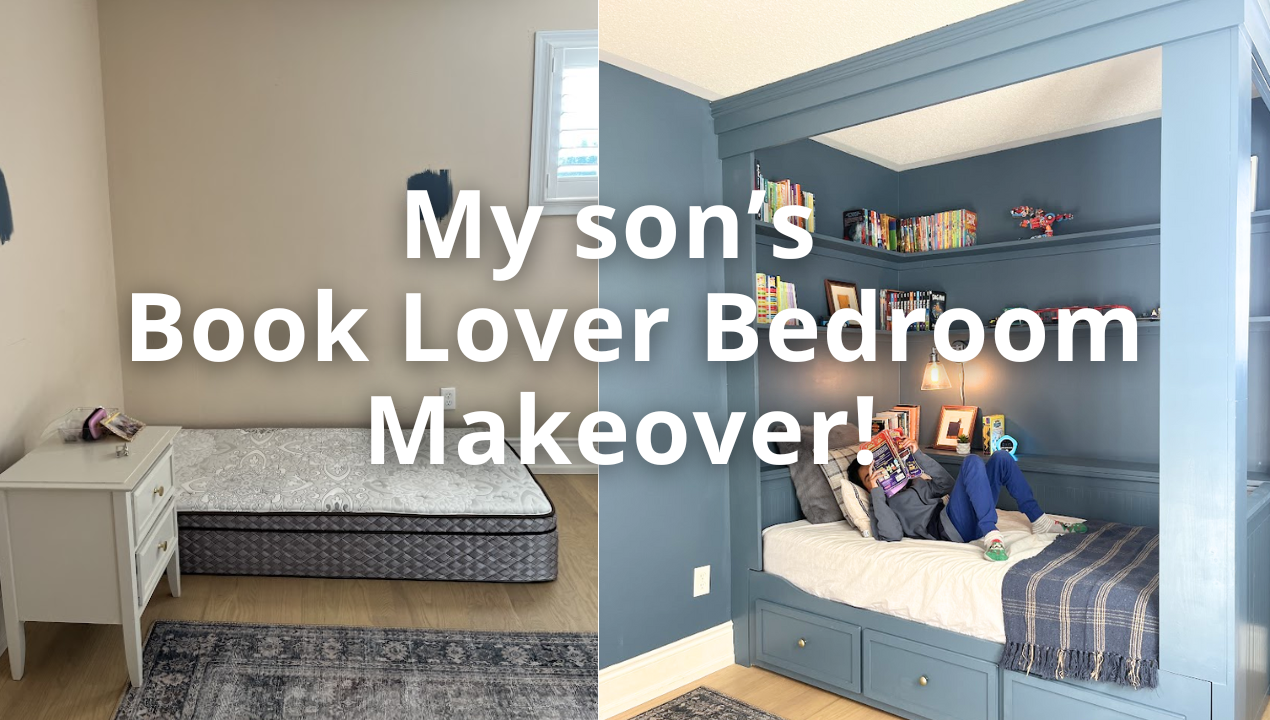
This project was close to my heart because it was for my 9-year-old son. After years of sharing a room with his younger brother, he finally has his own space. His requests were clear: blue painted walls and some book shelves because he LOVES to read!
He desperately needs a room makeover since we moved into the new house. In the old house, he shared a room with his younger brother in an IKEA bunk bed that I customized. The buyers loved the bunk bed I built so much that they asked us to leave it there.
So now my son has no bed, and his room has no character. He loves to read and the color blue. I decided to make his room like a library that he can enjoy and grow into!
The goal? To create a room that reflects his personality that I won’t need to upgrade as he matures into his teen years. In this post, I’ll walk you through the entire process, from planning to finishing touches, so you can gather ideas for your own DIY projects.

The Vision: A Room to Grow With Him
When designing kids’ rooms, one challenge is balancing their current interests with the need for longevity. Kids grow up so fast, and while I wanted this room to feel personal and fun now, it also had to transition seamlessly into his teenage years.
Here were the key design priorities:
- Timeless Color Palette: Blue was non-negotiable for my son, but I aimed for a sophisticated tone that wouldn’t feel too “kiddie” in a few years.
- Functional Layout: The room had to include plenty of storage, a cozy sleeping area, and a dedicated spot for reading and relaxing.
- Budget-Friendly Customization: Custom furniture can be expensive, so I focused on a IKEA hack to give affordable pieces a high-end look.
Picking a daybed to accommodate guests
The first thing I had to do was pick a bed for him. My husband’s family lives out of country, so I knew that I wanted a bed that was flexible enough to accomodate guests.
I picked this IKEA HEMNES Daybed. It’s cute and pulls out to a queen bed. Plus, it has lots of storage underneath in the 3 drawers. Perfect for my son’s stuffed animals and pokemon cards.
I’ve assembled a lot of IKEA furniture in my day, but this was WAS HARD. It took me about 4 hours and I had to call in my husband for lots of support. It was worth it, but don’t expect it to be a quick assembly.

Step 1: Choosing the Perfect Shade of Blue
Blue was the starting point for the room. To be honest, I was nervous about letting him pick the paint color. He’s only 9 years old. What if he changed his mind in a few years? I have 3 kids so I don’t want to set the expectation that rooms will be painted by mama at their will.
While blue a versatile color, the sheer number of shades available can be overwhelming. I wanted something moody and calming yet vibrant enough to feel youthful.
I pre-selected and tested 2 paint samples on the wall (always test in different lighting conditions!). I let him have the final say. He landed on Cape Cod Bay by BeautiTone (available at Home Hardware). This deep blue struck the perfect balance—dramatic without being overpowering.
Pro Tip: Involving Kids in Color Selection
Letting my son choose from a curated selection of blues was a game-changer. He felt empowered and excited about the project while I ensured the options aligned with the overall vision.
Step 2: Prepping and Painting the Room

Painting may seem straightforward, but preparation is everything. Here’s how I tackled the job:
- Clean and Prep the Walls: I filled nail holes, sanded rough spots, and wiped down the walls to ensure a smooth surface.
- Tape and Protect: To save time on cleanup, I taped edges and covered floors with drop cloths.
- Cut in First: Using a high-quality angled brush, I painted around edges, corners, and trim. This step is tedious but ensures clean lines.
- Roll the Walls: I used a roller to cover larger areas, working in small sections to avoid streaks.
The deep blue transformed the room instantly. The color added warmth and depth, creating a cozy yet modern backdrop for the rest of the design.

I admit, I did make a mistake when designing this room. I thought a slat wall behind his bed would look good. After cutting and staining 73 pieces of 1×2 pine, I hated it. It was giving rustic cottage vibe when I really wanted a sophisticated teen haven. So I removed all the wood, watched the wall, primed and painted.

I was defeated, but I knew I could recover. I kept thinking that I should paint the bed…
Step 3: Painting the Bed
Here’s everything I used to hack this bed:
I painted the bed frame the same shade blue as the walls. I have a step by step blog post on how to paint IKEA furniture. I used a cabinet-grade paint with a pearl finish. This trick made the bed seamlessly blend with the room’s aesthetic.
When painting any IKEA furniture, start by sanding with p80 grit sand paper.

Then, use a strong bond primer. I often turn to BIN primer. I gave this 2 coats of primer as it will have a lot of use with my kids.

Finish the paint job with 2 coats of paint. I used a foam roller to get a smooth finish.

After I painted the bed, I could really see a new vision of the room. It was like swimming in the deep blue sea!

Step 4: Designing a Book Lover’s Paradise
My son is a voracious reader, so incorporating ample book storage was non-negotiable. Built-in shelves were the solution, providing both function and visual interest.
Building the Shelves
I used pine boards for their durability and affordability. Here’s how I created the shelves:

- Measure and Plan: I measured the wall space around the bed to determine the size and spacing of the shelves.
- Build the shelves: I built a simple shelf using pine. I used 1×2 for the shelf support and 1×8 for the shelf base. I glued them together and clamped them. Then for stability, I drilled a pilot hole and secured with a 1 ¾” screw.
- Paint for Cohesion: When painting wood, use a primer that blocks knots and stains. I used BIN primer. Painting the shelves the same blue as the walls created a seamless, built-in look.
- Attach the Shelves to the wall: These need to be installed into studs so use a stud finder to mark the studs. Secure the 1×2 cleat into the studs using a 3’” screw.

You should be able to yank HARD on the shelves and will not budge or wobble. If you have any doubts, check the location of your studs and try again. You do not want these to fall down on your kiddo while they are sleeping.

Step 5: Create a cozy reading nook using the IKEA HEMNES Daybed
Next, I added a lot of trim detail to the bed (detailed tutorial coming soon!). To elevate the look, I added Shaker-style trim to the drawer fronts and framed the bed with stacked molding. These small upgrades gave the bed a polished, custom feel.

Step 5: Adding Custom Nightstand Storage
One challenge with the daybed was the lack of a traditional nightstand. To solve this, I built a small shelf behind the bed. This custom piece functions as a nightstand, offering a spot for essentials like an alarm clock, water bottle and current bedtime read.
This DIY addition was inexpensive to create and maximized the functionality of the space. Within the nightstand, I cut a hole for an outlet. This plugs into the outlet behind the bed.
Before and After: The Transformation

Looking back at the blank slate we started with, I’m amazed at how much personality and functionality we packed into this small room!!!! The deep blue walls and built-in features create a cozy yet sophisticated atmosphere. The shelves showcase my son’s love for books. No one would even believe I started with this IKEA daybed!
A room isn’t complete without thoughtful decor. I chose simple white bedding with textured throws and accent pillows in navy and gray. This kept the bed cozy while complementing the room’s palette. I secured a wall-mounted reading lamp added layers of warm, inviting light. I framed some of my son’s artwork and added a few inspirational prints. A soft area rug in a neutral tone grounded the room and added comfort.

The best moment was seeing my son’s face light up when he saw his finished room. He immediately curled up on his new bed with a book—a sure sign that the space was a success! I love this space so much that you can find me reading or working while he’s at school!
Designing my son’s room was a labor of love, and I couldn’t be happier with how it turned out. It’s a space that reflects his personality, meets his current needs, and will grow with him in the years to come.


Remember, my initial vision wasn’t perfect. But, it’s okay to make mistakes! Trust your vision. DIY projects can feel overwhelming, but persistence pays off!

If you’re tackling a similar project, I hope this inspires you to create a space that’s both beautiful and functional. Have questions or want to share your own makeover stories? Drop them in the comments or follow me on instagram—I’d love to hear from you!

Leave a Reply